UNI STUDENT
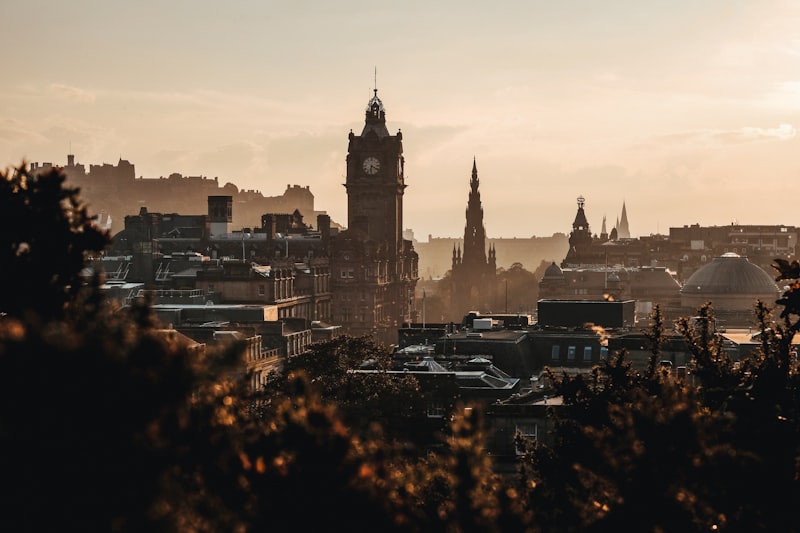
Choosing to study in Scotland gives international students access to a respected British education system with a long academic history and a strong research environment.
Scotland is home to universities and colleges offering programmes in engineering, medicine, business, computer science, renewable energy, art and the humanities. Its undergraduate system is known for its flexibility, with most bachelor’s degrees lasting four years and allowing students to explore a broader selection of subjects during the early stages of their studies.
Many taught master’s programmes can also be completed in one year of full-time study.
According to the official Scottish Government website, more than 73,000 international students from over 150 countries choose Scotland as their academic home.
UNI Student can help you compare universities, select a suitable course, prepare your application and understand the UK Student visa process.
Scotland offers several advantages to international students:
Universities with a long academic and research history.
A wide selection of undergraduate and postgraduate courses.
Flexible four-year bachelor’s degrees.
Many one-year taught master’s programmes.
Courses developed with employers and professional organisations.
A multicultural international student community.
Historic student cities with modern services.
Research opportunities in science, engineering, medicine and energy.
Part-time work rights subject to Student visa conditions.
A Graduate visa route for eligible students.
Easy access to other parts of the United Kingdom.
Yes. Scotland is one of the four nations of the United Kingdom. Student visas, employment rights and immigration procedures are therefore governed by UK law and managed by the UK Government.
However, Scotland has a distinct education system. One of the main differences is that most Scottish bachelor’s degrees take four years, compared with three years for many degrees in England, Wales and Northern Ireland.
Scotland’s higher education system includes universities, colleges, art schools, conservatoires and specialist institutions.
Students who do not meet the requirements for direct undergraduate admission may be able to complete a foundation programme. A foundation year normally lasts one year and combines academic subjects with English language and university study skills. The programme may be delivered directly by the university or through a partner college. Students should check the progression conditions before enrolling.
Scottish colleges offer vocational qualifications such as:
These programmes focus on practical and career-related learning. Some HNC and HND qualifications may provide entry into an advanced year of a related university degree, subject to the university’s transfer agreement and academic requirements.
Most bachelor’s degrees at Scottish universities take four years. Several programmes allow students to study a broad range of subjects during the first and second years before specialising.
Applicants with suitable previous qualifications may be considered for direct entry into the second year of selected degrees. This option is not available for every course and requires approval from the university.
Professional programmes such as medicine, dentistry and architecture usually take longer.
Many taught master’s programmes can be completed in one year of full-time study.
Research master’s degrees and some specialist programmes may take longer.
At several ancient Scottish universities, an undergraduate humanities or social science degree may be called a Master of Arts. Despite its name, this can be a first undergraduate degree rather than a postgraduate master’s qualification. Students should check the official level of the award.
A full-time doctoral programme usually takes three to four years, although the duration may vary according to the research project and funding arrangements.
Applicants generally need a suitable previous qualification, a research proposal, an academic supervisor and evidence that they can finance their studies and living expenses.
Scotland has a diverse range of institutions, including:
Universities focus on academic and research degrees, while colleges generally provide vocational qualifications such as HNCs and HNDs.
When choosing an institution, students should compare its degree-awarding powers, course content, professional accreditation, location, tuition fees, student services and placement opportunities.
Requirements vary between universities and courses. Common application documents may include:
A valid passport.
A high school certificate.
Academic transcripts.
A bachelor’s degree for master’s applications.
A master’s degree for doctoral applications, where required.
Evidence of English language proficiency.
A personal statement or study motivation.
One or more academic references.
A CV for certain postgraduate courses.
A research proposal for research degrees.
A portfolio for art, design and architecture programmes.
Evidence of professional experience.
Certified translations of documents not issued in English.
Most universities require international students whose previous education was not in English to provide evidence of English proficiency.
Accepted qualifications may include:
Required scores vary by course and institution. Medicine, law and postgraduate programmes may set higher English requirements.
Students must also ensure that their evidence satisfies the requirements for the university to issue a Confirmation of Acceptance for Studies, known as a CAS.
Many universities offer pre-sessional English courses for applicants who need to improve their language and academic skills.
Applications to most Scottish undergraduate programmes are submitted through UCAS.
Students can normally include up to five choices, although restrictions apply to certain combinations of courses.
An application usually contains:
Application deadlines depend on the subject. Medicine, dentistry, veterinary medicine and certain universities or courses have earlier deadlines.
Most Scottish universities accept postgraduate applications through their own websites. Some courses may also use an external application platform.
Deadlines and document requirements can differ between departments within the same university. Students should review the official course page before applying.
Applications to the Royal Conservatoire of Scotland and certain performing arts courses may require a specialist admissions platform, an audition or an interview.
Art, design and architecture applicants normally need to submit a portfolio.
The general application process includes:
Choose a degree level and subject.
Compare universities and colleges.
Review academic and English requirements.
Check tuition fees and prepare a budget.
Collect academic and supporting documents.
Apply through UCAS or directly to the university.
Complete an interview or examination if required.
Receive a conditional or unconditional offer.
Satisfy the conditions of the offer.
Accept the offer and pay the required deposit.
Receive a CAS from the institution.
Apply for the UK Student visa.
Arrange accommodation and travel.
Arrive in Scotland and complete registration.
International students normally pay tuition fees for undergraduate and postgraduate programmes. Each Scottish university sets its own fees according to the subject and level of study.
Study UK provides the following general UK-wide estimates:
These are indicative UK ranges rather than fixed Scottish tuition fees. Medicine, dentistry, clinical programmes and MBA degrees may cost considerably more.
Because most Scottish bachelor’s degrees take four years, students should calculate the total cost of the degree rather than considering only the annual fee.
Before accepting an offer, students should request a complete fee schedule covering:
Living expenses vary between Edinburgh, Glasgow, Aberdeen, Dundee, St Andrews and smaller Scottish cities.
Study UK estimates that international students outside London may need approximately £900–£1,300 per month for accommodation, bills, food, transportation and other expenses.
A student budget should include:
Scottish universities and colleges offer a broad selection of academic and professional programmes, including:
Edinburgh is Scotland’s capital and is home to universities, cultural institutions and companies in finance, tourism and technology. It is known for its history and international festivals, although accommodation can be expensive.
Glasgow is Scotland’s largest city and has several universities and colleges. It offers an active student environment and is known for art, music, engineering and business.
Aberdeen has strong links to energy, engineering and marine science. Its economy is also developing around renewable energy and environmental transition.
Dundee is recognised for design, digital games, medicine and life sciences. Its living costs may be more manageable than those in Edinburgh.
St Andrews is a small historic university town offering a distinctive student experience. Students should begin their accommodation search early because local supply can be limited.
Stirling offers a quieter environment close to the Scottish countryside, with programmes in business, sport, science and the social sciences.
International students may be eligible for UK government, international and university scholarships.
Chevening is the UK Government’s international scholarship programme. It supports eligible one-year master’s degrees at UK universities, including institutions in Scotland.
The scholarship is competitive, and eligibility criteria and deadlines differ between application cycles and participating countries.
GREAT Scholarships are offered through partnerships between the British Council and participating UK universities. Scottish universities may participate depending on the year and applicant’s nationality.
Commonwealth Scholarships are available to citizens of selected Commonwealth countries. Opportunities may include master’s, doctoral, distance learning and fellowship programmes.
Scottish universities may offer scholarships or tuition discounts based on:
Students should check whether an award is automatic or requires a separate application, and whether it continues for every year of study.
Because Scotland is part of the UK, international students normally need a UK Student visa. Applicants must have an offer from an institution included on the register of licensed student sponsors and receive a CAS before applying.
Visa documents may include:
Students should use the official GOV.UK service to obtain the exact document list for their circumstances.
From 8 April 2026, the fee for a Student visa application submitted outside the UK is £558.
Students staying for more than six months normally also need to pay the Immigration Health Surcharge — IHS as part of the application.
The reduced IHS rate for students is currently £776 for each year of immigration permission. A visa may be issued for longer than the academic course, so the final amount is calculated according to the total period of permission.
Paying the IHS allows access to the National Health Service under the applicable rules, although not every service or cost is covered.
Student visa applicants must show that they can pay:
All Scottish universities are outside London for Student visa financial purposes. The current maintenance requirement is £1,171 for each month of study, up to nine months.
The maximum maintenance amount is therefore £10,539, in addition to any outstanding tuition shown on the CAS.
The money usually needs to be held for 28 consecutive days unless the applicant qualifies for an exemption or relies on an eligible student loan or official financial sponsorship.
This is a visa requirement and does not guarantee that the amount will cover every student’s actual expenses.
An eligible student taking a full-time degree-level course with a qualifying higher education provider can normally work:
A student enrolled in a full-time course below degree level may normally work up to 10 hours per week, depending on the sponsor and visa conditions.
Student visa holders are generally not permitted to:
Students should check the work conditions shown in their digital immigration status because rights vary according to the programme and sponsor.
Students who successfully complete an eligible course may apply for a Graduate visa from inside the UK before their Student visa expires.
The route does not require a job offer or employer sponsorship and allows graduates to look for work and work in most jobs.
The Graduate visa lasts:
The Graduate visa cannot be extended. However, an eligible graduate may later switch to another route, such as the Skilled Worker visa. The Graduate route is not, by itself, a direct route to settlement.
The ability to bring a partner or children is restricted under the UK Student visa rules.
Most undergraduate students and students taking taught master’s degrees cannot bring family members as Student dependants.
The option is mainly available to limited categories, including certain government-sponsored students and eligible postgraduate research students.
Students should verify the programme type, course start date and current dependant rules before making family arrangements.
Accommodation options include:
Students should compare:
Accommodation should be booked early, especially in Edinburgh and St Andrews. Students should verify the provider and contract before transferring money.
Scottish universities award British qualifications that may be recognised internationally, but final recognition depends on the destination country and profession.
Before enrolling, students should verify:
Medicine, dentistry, veterinary medicine, engineering, architecture, law and teaching may require additional recognition or professional registration.
Most Scottish bachelor’s degrees take four years. Professional degrees such as medicine, dentistry and architecture may take longer.
Many taught master’s programmes can be completed in one year of full-time study, while research and specialist programmes may take longer.
Yes. International students are therefore subject to UK Student visa and immigration rules.
Yes. Applications to most undergraduate courses are submitted through UCAS. Postgraduate applications are normally made directly to the university.
Fees vary by university and programme. Study UK provides a general range of £11,400–£38,000 per year for undergraduate study and £9,000–£30,000 for postgraduate study. Certain courses cost more.
An indicative budget outside London is approximately £900–£1,300 per month, depending on the city, accommodation and lifestyle.
A student studying in Scotland currently needs to show £1,171 per month for up to nine months, in addition to outstanding tuition fees.
Eligible degree-level students can normally work up to 20 hours per week during term time and full-time during official vacations.
Eligible graduates may apply for a Graduate visa. It lasts 18 months for non-doctoral applications submitted from 1 January 2027, while doctoral graduates continue to receive three years.
Yes. Options include Chevening, GREAT Scholarships, Commonwealth Scholarships and awards offered directly by Scottish universities.
Our education consultants are ready to help with every step from choosing your university to arriving at your destination.
Get a 100% Book Your Free Consultation tailored to your grades, budget & dream country.